Build a Budget Home Theater System: Components, Setup & Tips
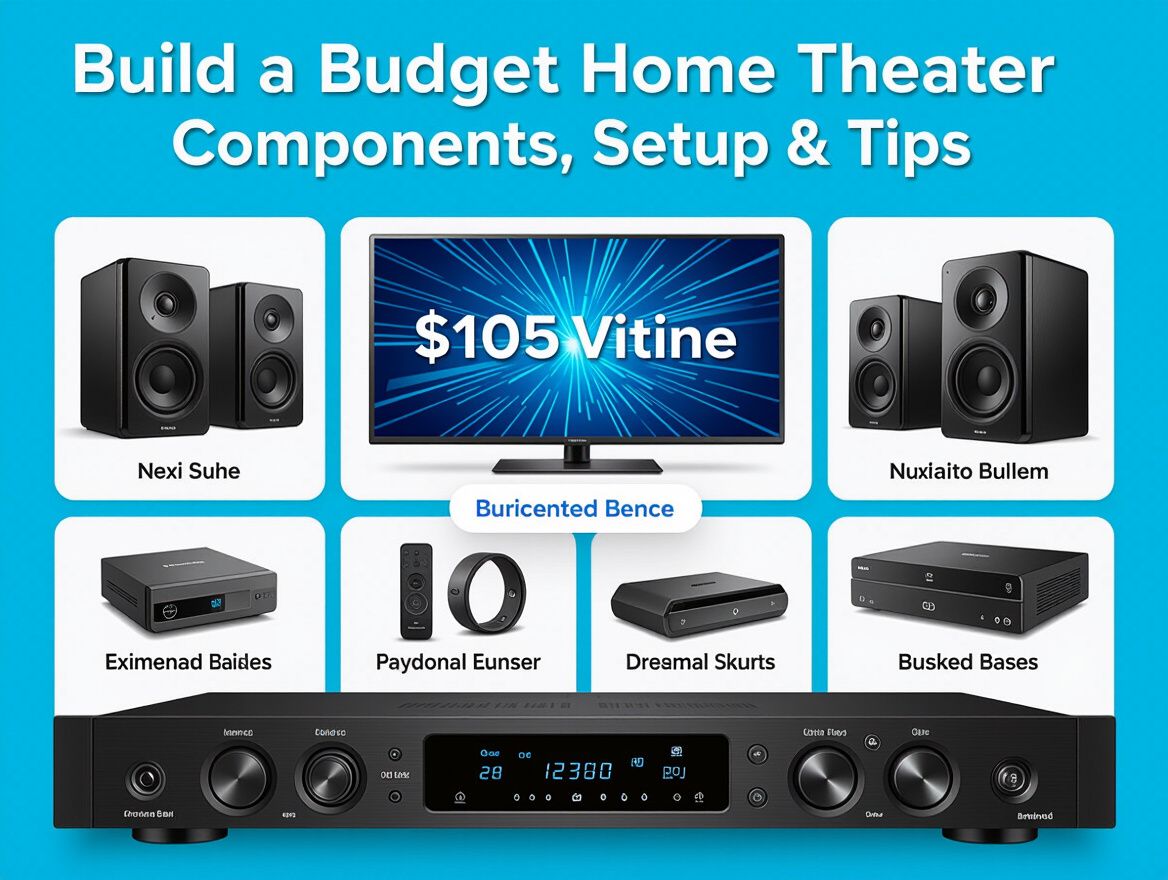
Build a budget home theater system with components, setup tips, and affordable display solutions to create an immersive experience without overspending.
Understanding the Core Components of a Budget Home Theater System
Welcome to your comprehensive guide on building an exceptional budget home theater system. Whether you're a seasoned audiophile looking to optimize your spending or a newcomer eager to create an immersive entertainment space without a premium price tag, this resource is designed to empower you. We'll navigate the essential components, prioritize your investments, explore smart budget choices for displays, delve into the often-overlooked world of acoustics, and highlight crucial DIY setup tips and common pitfalls to ensure your home theater on a budget delivers maximum value and enjoyment.
The Essential Players: What You Need
Setting up a budget home theater system involves understanding the core components that work together to deliver audio and video. For an affordable home theater, knowing these elements and their roles is the first step to making informed decisions.
-
The Receiver (AVR): The brain of your system. This device amplifies audio signals from your sources and distributes them to your speakers. It also acts as a switchboard, allowing you to connect various devices like Blu-ray players, game consoles, and streaming sticks, and then outputting the audio and video to your display and speakers. For budget builds, look for models offering at least 5.1 or 7.1 channels, adequate HDMI inputs for your devices, and support for common surround sound formats like Dolby Digital and DTS. While higher-end AVRs offer advanced features and more channels, entry-level models can provide excellent performance for a standard 5.1 setup. Consider refurbished options or older models that still support current HDMI standards and audio codecs. Soundbars can sometimes replace the need for a separate AVR in simpler setups, as discussed later.
-
Speakers: The Voice of Your System These are arguably the most critical components for an immersive audio experience in your home entertainment setup.
- Front Left/Right (L/R): These speakers handle the primary stereo soundstage and the majority of on-screen audio, including music and main sound effects. Their quality significantly impacts the overall sound.
- Center Channel: This speaker is paramount for clear dialogue. It's typically positioned directly above or below your display and is responsible for vocal frequencies.
- Surround Speakers (Rear L/R): These create the immersive, ambient sound effects that envelop the listener, placing sound in the “rear” or to the sides of the audience for a true surround sound experience.
- Subwoofer: This specialized speaker is dedicated to reproducing low-frequency effects (bass). It adds impact to explosions, music, and other dynamic sounds, significantly enhancing the cinematic feel.
-
The Display: Your Visual Canvas The visual component is what brings your movies and games to life.
- Television (TV): The most common and straightforward choice for a home theater. Budget options include modern LED or QLED televisions that offer excellent value. For a cheap home theater setup, you might balance screen size with resolution; a large 1080p TV could be more budget-friendly than a smaller 4K model, though 4K is becoming increasingly affordable and is recommended for future-proofing.
- Projector and Screen: For those seeking a true cinema feel, a projector and screen combination can be surprisingly affordable. Entry-level full HD or even 4K projectors are available. For screens, manual pull-down or entry-level fixed-frame options offer a good balance of cost and performance, with DIY screen solutions also being a viable route.
Prioritizing Components for Maximum Impact
When building a budget home theater system, understanding where to allocate your funds is key. Not all components offer the same uplift in performance for the cost.
-
Why speakers often trump other components for budget builds: For an immersive audio experience, the quality of your speakers directly dictates how well you’ll perceive detail, dialogue, and surround effects. A high-end display with mediocre sound will not provide a satisfying cinematic experience. Investing more in front speakers (L/R and center) and potentially a capable subwoofer can yield more noticeable improvements than upgrading to a slightly better display on a tight budget.
-
Balancing the budget across receiver, speakers, and display: A common strategy for a home theater on a budget is to allocate roughly 40-50% of your budget to speakers, 20-30% to the display, and the remaining 20-30% to the receiver and any accessories like cables or stands. This ratio can, of course, be adjusted based on individual priorities.
-
The role of the subwoofer in enhancing cinematic experience: A good subwoofer is crucial for conveying the impact and depth of action movies and music. Even an entry-level powered subwoofer can dramatically enhance the visceral experience of certain content, often providing more noticeable impact than subtle differences in display technology at a similar price point.
Prioritizing Sound Quality with Budget Speakers
Achieving good surround sound on a budget is possible with careful selection and strategic investment in your speaker system. This section focuses on making the most of your speaker budget.
The Speaker Hierarchy: Where to Invest Your Budget
When building a budget home theater system, understanding the hierarchy of speaker importance can guide your purchasing decisions for maximum acoustic impact.
-
Front L/R Speakers: These are often the most critical for general audio performance. Bookshelf speakers typically offer better value for money in the budget segment, providing good clarity and detail without the higher cost of floorstanding towers. They are a highly recommended starting point for your best budget home theater setup. Prioritize speakers that reproduce voices and primary instruments clearly. Listen for crisp highs and well-defined mids.
-
Center Channel Speaker: Dialogue is paramount for understanding and enjoying most content. It’s generally recommended to use a center channel speaker from the same manufacturer and series as your front L/R speakers to ensure tonal consistency. This "timbre matching" helps create a seamless soundstage as audio elements move across the front of your room. A clear, articulate center channel speaker is non-negotiable for enjoying dialogue in films and TV shows.
-
Surround Speakers: Creating immersion is their goal. For a cheap home theater setup, compact satellite speakers are often included in package deals and are easy to place. However, more capable bookshelf speakers serving as surrounds can offer a richer, more detailed surround effect, particularly if the room is larger. Proper placement (typically to the sides and slightly behind the listening position) is crucial for creating an immersive sound field.
-
Subwoofer: The Bass Foundation A capable subwoofer adds the visceral punch and depth that makes movies exciting and music more engaging. For a budget home theater system, this is often where additional savings can be made initially, but a decent model is highly recommended for a complete experience. Most modern subwoofers are "active," meaning they have their own built-in amplifier. This is generally preferred for ease of use and performance. Larger subwoofers can often produce deeper bass. Ported designs can enhance low-end output but may be less precise than sealed designs, though this is less of a concern for budget-oriented systems.
Soundbar vs. Traditional Surround Sound on a Budget
Choosing between a soundbar and a traditional multi-speaker setup is a common decision point for affordable home theater enthusiasts.
-
Soundbars:
- Pros: Simplicity is their greatest asset. They are easy to set up, take up minimal space, and often include a wireless subwoofer for a degree of bass extension. They can offer a significant upgrade over TV speakers.
- Cons: True surround sound effects are often simulated rather than discrete. Upgradeability is limited, and they generally offer less flexibility than a component system.
- When it's the best budget option: A soundbar is an excellent choice for smaller rooms, minimalist setups, or when ease of use and aesthetics are top priorities. They can serve as a gateway into better audio for a budget home theater system.
-
2.1 Systems: This configuration, consisting of a receiver, front L/R speakers, and a subwoofer, offers a solid stereo foundation with bass enhancement. It's a good starting point for upgradability, as you can gradually add a center channel and then surround speakers later, making it a flexible option for a home theater on a budget.
-
5.1 Systems: This is the standard surround sound configuration, consisting of front left/right, center, surround left/right speakers, and a subwoofer. Many manufacturers offer pre-matched 5.1 speaker packages designed to work together, simplifying selection and often providing good value for a complete surround sound experience. These are a cornerstone of many best budget home theater recommendations.
What to Look for in Budget Speaker Packages
When considering pre-packaged speaker systems for your budget home theater system, a few key considerations can help ensure you get good value.
- Matching impedance and sensitivity: Ensure the speakers' impedance (a measure of electrical resistance, typically 4 or 8 ohms) is compatible with your receiver and that their sensitivity (how loud they play with a given amount of power) is reasonably matched, especially between front speakers.
- Driver materials and construction quality: While budget speakers won't use exotic materials, look for robust cabinet construction and drivers that appear well-made. Avoid speakers with overly flimsy cabinets or thin, flexible cones.
- Brand reputation in the budget segment: Some brands have a strong reputation for offering good value in the budget and mid-range markets. Researching these brands can help you find reliable options.
DIY Setup Saves Money and Enhances Understanding
Building a budget home theater system isn't just about buying affordable components; it's also about intelligent setup and configuration. DIY approaches can save significant money and lead to a much better-sounding system.
Planning Your Layout: Speaker Placement is Key
Proper speaker placement is free and one of the most impactful factors in achieving good surround sound with any home audio system, especially a budget one.
-
The 5.1 Speaker Setup:
- Front L/R speaker placement relative to the display: These speakers should ideally be placed at ear level and equidistant from the display, forming an equilateral triangle with your primary listening position.
- Center channel placement for optimal dialogue: This speaker should be as close to ear level as possible, directly above or below the screen, and aimed at the listener. The goal is for dialogue to feel like it's coming from the screen itself.
- Surround speaker positioning for immersion: For a standard 5.1 setup, surround speakers are typically placed to the sides and slightly behind the main listening position, also around ear level or slightly above.
-
Room Considerations:
- Seating position: Identify your primary listening position (the "sweet spot") first, then arrange speakers relative to it.
- Obstructions and room shape: Be mindful of furniture, windows, and doors that might block speakers or create problematic reflections. Irregular room shapes can sometimes be advantageous acoustically.
-
Using Calibration Tools:
- Included microphone with AVRs: Most modern AVRs come with a microphone and an auto-calibration system (like Audyssey, YPAO, or Dirac Live). Running this is crucial for a budget home theater system to help balance speaker levels and distances.
- Basic manual adjustments for levels and distances: Even after auto-calibration, it’s wise to verify speaker levels using an SPL meter app on your phone and to ensure speaker distances are set correctly in the AVR's menu.
Cable Management: Keeping it Tidy and Functional
While not directly impacting sound quality, good cable management makes your cheap home theater setup look professional and prevents trip hazards.
- Types of Speaker Wire: Gauge and material matter for longer runs. For most budget systems and distances under 50 feet, 16-gauge speaker wire is often sufficient. Ensure it's oxygen-free copper (OFC) if possible.
- HDMI Cables: Ensuring compliance with standards (e.g., HDCP 2.2 for 4K content) is important, but you generally don't need expensive "premium certified" cables for basic functionality. Standard certified cables are usually adequate.
- Hiding Wires:
- Cable raceways and clips: These adhesive or screw-mounted channels are excellent for managing wires along walls, baseboards, or behind furniture.
- In-wall or under-carpet solutions (advanced DIY): For a truly clean look, consider running speaker wire or HDMI cables inside your walls or under carpets. This requires more effort but offers the most professional finish for your budget home theater system.
Basic Calibration for Optimal Sound
Proper calibration is where you unlock the full potential of your budget home theater system.
- Setting Speaker Levels: Ensure all speakers play at a consistent volume from the listening position. This is critical for a balanced soundstage and accurate surround effects.
- Setting Speaker Distance: This tells your AVR how far away each speaker is, allowing it to apply necessary time delays so that sound from all speakers arrives at your ears simultaneously. Incorrect distances ruin the soundstage and imaging.
- Crossover Frequency: This setting directs low-frequency sounds below a certain frequency (e.g., 80 Hz) to the subwoofer, while higher frequencies are sent to the main speakers. Proper crossover setting ensures your main speakers aren't asked to produce bass they can't handle, and your subwoofer gets the low-end information.
- Room Correction Software: Leverage the built-in room correction features of your AVR. While not as sophisticated as high-end standalone systems, they can make a significant difference in optimizing sound for your specific room acoustics.
Leveraging Affordable Display Options
The visual component of your budget home theater system is crucial, and there are excellent affordable options available.
Smart TV Choices for Your Budget Home Theater
Modern televisions offer a wealth of features at competitive prices.
- Screen Size vs. Resolution: Finding the sweet spot for your home theater on a budget. While 4K resolution is increasingly affordable and recommended for clarity, a larger 1080p TV might be preferable to a smaller 4K model if budget is extremely constrained. However, for a truly cinematic feel, a larger screen is generally more impactful.
- Panel Technology: LED TVs are the most common and offer good value. QLED TVs, an evolution of LED, often provide better brightness and color reproduction and are becoming more accessible in budget-friendly lines. For most cheap home theater setup scenarios, a good quality LED TV provides excellent performance.
- Smart Features: Most modern TVs come with built-in smart platforms. Consider whether you need extensive app support or if an external streaming device (like a Roku, Fire TV Stick, or Apple TV) would suffice. Built-in smart features can sometimes add to the cost without providing significant, unique benefits over a separate streamer.
- Refresh Rate and HDR Support: For movies and gaming, a higher refresh rate (e.g., 60Hz or 120Hz) can provide smoother motion. High Dynamic Range (HDR) support (like HDR10 or Dolby Vision) enhances contrast and color, offering a more lifelike image, though the benefits are more pronounced on brighter, higher-end displays.
Projectors and Screens: The Big Screen Experience for Less
For an immersive feel that rivals commercial cinemas, a projector and screen setup can be a surprisingly affordable choice for your budget home theater system.
-
Entry-Level Projector Considerations: Lumens (brightness) are important to combat ambient light; fewer lumens are needed for a dedicated dark room than for a living room with some light control. Check specifications for native resolution (not just "supported resolution"). Aim for at least native 1080p resolution for good image quality. While 4K projectors are becoming more accessible, check their native resolution specs carefully. Projector bulbs have a finite lifespan and can be expensive to replace. Look for models with long lamp life or those using LED or laser light sources, which typically last much longer. Input lag is crucial if you plan to use the projector for gaming; lower input lag (measured in milliseconds) means a more responsive experience.
-
Budget Screen Options: Manual pull-down screens are an economical choice, though they can sometimes suffer from rippling or lack a perfectly flat surface. Fixed-frame screens often offer the best value for picture quality, providing a perfectly flat surface for optimal image reflection. These can be a significant upgrade over pull-down screens for your affordable home theater. Painting a wall with specialized screen paint or stretching acoustically transparent fabric can be extremely cost-effective and yield excellent results.
-
Placement and Throw Distance: This is critical. Projectors have specific "throw ratios" that dictate how far back they need to be placed to achieve a given screen size. Accurately measuring this distance is essential before purchasing.
Refurbished and Used Components: Savvy Savings
Buying pre-owned or factory-refurbished equipment is a smart way to stretch your budget for a budget home theater system.
- Where to Buy: Reputable dealers, manufacturer refurbished programs, and trusted online marketplaces are good places to start. Look for sellers with strong return policies.
- What to Look For: Warranties, return policies, and detailed condition reports are essential when buying used or refurbished electronics.
- Best Bets for Used/Refurbished: Receivers, projectors, and sometimes speakers can be excellent value when bought pre-owned. Items with fewer moving parts or solid-state components tend to be more reliable.
- Components to Be Cautious With: Displays (TVs or projector lamps) can have limited lifespans or potential issues like dead pixels or burn-in (in older technologies). Subwoofers might have worn-out drivers or aging amplifier components that are harder to assess without testing.
Acoustics Matter, Even on a Budget
The room your budget home theater system operates in has a profound impact on sound quality. Addressing acoustics doesn't always require expensive professional treatments.
The Impact of Room Acoustics on Sound
Sound waves interact with your room's surfaces, influencing clarity, bass response, and immersion.
- Reflection and Refraction: Sound bounces off hard surfaces (walls, floor, ceiling, windows), causing reflections that can arrive at your ears slightly after the direct sound from the speaker. This can smear details and reduce clarity.
- Absorption and Diffusion: Absorption means soaking up sound energy (e.g., with soft materials), reducing reflections. Diffusion means scattering sound waves in multiple directions, preventing strong, direct echoes. Both are key to controlling room acoustics.
- Echo and Reverberation: These are unwanted prolonged repetitions or reflections of sound. Echoes are distinct repetitions, while reverberation is a more complex decay of sound. Excessive echo and reverberation can make dialogue hard to understand and music sound muddy.
Simple & Affordable Acoustic Treatments
You can significantly improve your room's acoustics with common household items.
-
Soft Furnishings:
- Rugs and carpets: A thick rug on a hard floor dramatically reduces floor reflections, a major source of acoustic problems.
- Curtains and drapes: Heavy curtains can absorb mid and high frequencies, taming harsh reflections from windows.
- Upholstered furniture: Sofas, chairs, and ottomans all contribute to sound absorption. The more soft furnishings you have, the better the acoustics will typically be.
-
Strategic Placement:
- Arranging furniture to break up parallel surfaces: Placing bookshelves or even angled furniture can help break up flat, parallel walls, which are notorious for causing problematic sound reflections and build-up of standing waves.
- Using bookshelves as diffusers: The irregular surfaces of books and shelves can scatter sound waves, acting as natural diffusers.
DIY Acoustic Solutions
For a more targeted approach to acoustics in your budget home theater system, DIY solutions are highly effective.
-
DIY Acoustic Panels: Using rigid fiberglass or mineral wool insulation, which can be purchased from building supply stores and cut to size, is excellent for sound absorption. Construct simple wooden frames and mount the insulation within them. Cover with an acoustically transparent fabric (like burlap or Guilford of Omnia fabric) for a neat appearance. Position these panels on your side walls and ceiling, specifically at the points where sound from your front speakers reflects off these surfaces before reaching your listening position.
-
Bass Traps: Bass frequencies tend to build up in room corners. Simple DIY bass traps (often built from thicker insulation material) placed in corners can help tame boomy bass. These can range from simple corner-filled porous absorbers to more complex resonant designs if you're feeling adventurous.
Common Pitfalls to Avoid in Your Budget Build
Building a budget home theater system is rewarding, but it's easy to stumble into common traps that diminish performance or value. Awareness is your best defense.
Overspending on Diminishing Returns
Not all upgrades offer equivalent value, especially on a budget.
- Chasing the highest specs where the difference is imperceptible: For instance, paying a premium for microscopic improvements in HDMI cable performance that offer no audible or visible benefit for typical use.
- Expensive cables vs. appropriately gauged ones: Beyond basic functionality, the cost of "audiophile" cables rarely translates into perceivable sound improvements in a budget system.
- High-end features on receivers not fully utilized: Buying an AVR with 11 channels and advanced processing when you only plan to run a 5.1 system is unnecessary expenditure.
Compatibility Issues: The Silent Killer of Sound
Mismatched components can lead to poor performance or even damage.
- Receiver and Speaker Impedance Mismatch: Connecting speakers with a lower impedance than your receiver is rated for can cause the receiver to overheat and potentially fail. Always check your receiver's manual for supported speaker impedance.
- Speaker Sensitivity: A low-sensitivity speaker requires more power from your receiver to reach a certain volume. If your receiver is underpowered, the sound may be thin or distorted.
- HDMI Handshake Problems: Sometimes, different HDMI devices struggle to communicate correctly, resulting in no picture or sound. Ensuring all components meet current HDMI standards (e.g., HDCP 2.2 for 4K) can mitigate this.
Rushing the Setup Process
Taking shortcuts during setup can cripple the performance of even good components.
- Neglecting proper speaker placement: Eyeballing placement instead of measuring and positioning speakers according to recommended guidelines will lead to a suboptimal soundstage.
- Skipping or inadequately performing calibration: Relying solely on auto-calibration without checking results or making manual adjustments can leave significant performance on the table.
- Improper cable routing and connections: Loose connections can cause intermittent audio dropouts, while poorly routed cables can be a tripping hazard and affect the aesthetics of your cheap home theater setup.
Ignoring Room Treatment
Assuming your room acoustics aren't a major factor is a common mistake that severely impacts sound quality.
- Assuming the room acoustics aren't a major factor: Even the most expensive budget home theater system will sound poor in a highly reflective, untreated room.
- Underestimating the impact of simple, inexpensive treatments: Basic acoustic treatments like rugs, curtains, and strategic furniture placement cost very little but can produce dramatic improvements in clarity and immersion.
Buying Components in Isolation
Failing to consider how components will work together as a system.
- Not considering how components will work together as a system: Purchasing components one by one without a plan can lead to imbalances or compatibility issues that are hard to rectify later.
- Impulse purchases without system-wide planning: While deal-hunting is part of building a budget system, unplanned purchases can derail your overall goal and lead to components that don't integrate well.
Frequently Asked Questions (FAQ) About Budget Home Theater Systems
Can I achieve good surround sound on a shoestring budget?
Yes, absolutely. The key is prioritizing your investments, with the front speakers and center channel often being the most critical for perceived quality. Proper speaker placement, basic DIY acoustic treatments, and careful use of your AVR's calibration tools can make a significant difference, often surpassing the performance of more expensive, poorly set-up systems.
What's the minimum system I can get away with?
For a noticeable upgrade over TV speakers, a good quality soundbar with a wireless subwoofer is often the minimum viable option for a simple, integrated system. Alternatively, a basic 2.1 system (AV receiver, two front speakers, and a subwoofer) offers a solid foundation that can be expanded later as your budget allows.
How much should I budget for a decent starting system?
A functional and enjoyable 5.1 budget home theater system can often be assembled for somewhere between $500 and $1000 by carefully selecting components, taking advantage of sales, considering refurbished items, and employing DIY setup techniques. Prices can vary widely based on brand, features, and current market conditions.
Are used projectors a worthwhile investment for a budget setup?
Yes, used projectors can be a fantastic way to achieve a large screen experience on a budget. However, it's crucial to buy from reputable sellers, check the projector's lamp hours, inspect for physical damage, and ensure there's a reasonable return policy. Projectors with many hours on their lamps may require costly bulb replacements soon after purchase.
What's the single most important component for a budget home theater?
While entirely subjective, many enthusiasts would argue that the front left and right speakers, or a high-quality center channel speaker, offer the most significant impact on perceived audio quality for a budget home theater system. Clear dialogue and a well-defined stereo image form the bedrock of an enjoyable experience.
How do I connect my devices to a budget receiver?
Most modern devices (Blu-ray players, game consoles, streaming boxes) connect to your receiver primarily via HDMI cables for both audio and video signals. Ensure your receiver has enough HDMI inputs to accommodate all your source devices. Older devices might use other connection types like optical audio or RCA, but HDMI is the standard for current home entertainment setups.
Related Guides
Best Budget Home Theater Systems Under $500: Expert Recommendations
Discover the best budget home theater system under $500 with expert recommendations on HTIBs, 5.1 setups, and soundbars for immersive audio.
Best Wireless Home Theater Systems: Reviews & Buyer's Guide
Discover the best wireless home theater systems for immersive sound without the clutter, featuring reviews and a buyer's guide.